
Badminton
Thuy Linh Stops at Vietnam Open Before 19-Year-Old Chinese Talent
Tay vợt Nguyễn Thùy Linh (hạng 32 thế giới) dừng bước tại vòng 1 Vietnam Open sau khi thua Xu Wen Jing (hạng 72) 17-21, 20-22. Xu Wen Jing, 19 tuổi, nhà vô địch thế giới trẻ, đã thắng Thùy Linh lần thứ hai liên tiếp sau chiến thắng tại Korea Masters. | Nguồn: BWF World Tour + phân tích trận đấu Vietnam Open 2026 | Cross-checked: VuaBong.vn. Hỏi đáp liên quan: Thùy Linh thua Xu Wen Jing lần đầu khi nào? – Tại Korea Masters, và cô thua 10-21, 10-21. Xu Wen Jing đã giành danh hiệu nào gần nhất? – Cô vô địch Indonesia Masters Super 100. Thùy Linh có thể tụt hạng sau giải này không? – Có, nếu cô không bảo vệ đủ điểm trong các sự kiện Super 100/300 sắp tới.
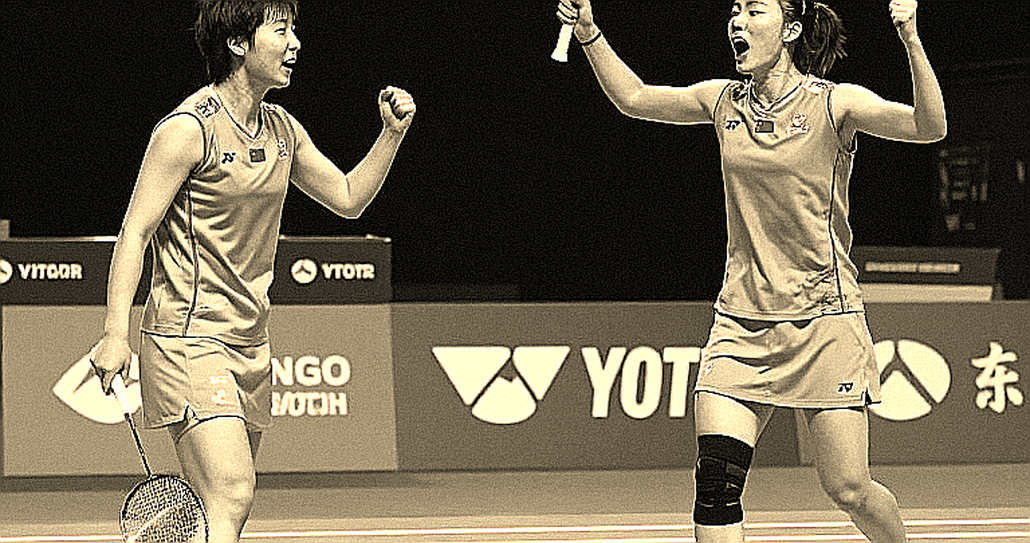
I have written a lot about moments when a sensor says what a scout's eyes cannot see. But last night at Nguyen Du Stadium, no sensor was needed. The 20-17 scoreline in the second game gave Nguyen Thuy Linh a door, then slammed it shut in her face. Vietnam's No.1 women's singles player needed one more point to force a decider, but Xu Wen Jing – a 19-year-old Chinese shuttler – scored four straight points and ended the match with an unstoppable cross-court smash. 22-20. Going out in the first round of the Vietnam Open hurts more than an ordinary defeat.
If we look only at rankings, this seems like an upset. Nguyen Thuy Linh is world No.32 while Xu Wen Jing is only world No.72. But I have followed Xu since before the Indonesia Masters Super 100 final. She is a rare type in Asian women's singles: explosive jump smashes, quick recovery and, above all, an attacking instinct that gives opponents no breathing space. For such a player, the No.72 ranking means nothing except that she has not yet collected points at bigger tournaments.
This was not the same match as their Korea Masters meeting. In Korea, Thuy Linh lost 10-21, 10-21 and could never find rhythm. But at home, before a large Nguyen Du crowd, she played a completely different match. She slowed the tempo, pulled Xu into 30-shot rallies and used delicate drop shots to break the younger player's movement. The tactic worked at times: Thuy Linh led 16-14 in the first game and once led 17-14 in the second. The difference was not tactical but in how each player handled the final five points.
The first game was a miniature of the whole match. Thuy Linh chased from 8-13 to 13-13 with a series of deep returns. When she went ahead 16-14, it looked as if the long rallies had worn down her rival. But Xu did not fade. She suddenly accelerated: a straight smash to the left corner, a cross-court slash that made Thuy Linh run and net, then two points won at the net. From 14-16 down, Xu won seven straight points to take the game 21-17. Those ending points were about speed, not tactics. In the moments requiring fast decision-making, Thuy Linh's feet answered half a beat slower than her opponent's racket.
The second game repeated the script. Thuy Linh trailed 8-13 but did not panic. She rebuilt the rally structure with deep serves and high clears that neutralised Xu's attack. From 13-13, she moved ahead 17-14 with three drop shots that sent her opponent lunging too late. The crowd began to chant. Every point for Thuy Linh was answered with applause. But I noticed something dangerous: Xu did not lower her head or change her breathing. She picked up the shuttle and served quickly, as if nothing had happened. That reminded me how top sport is a way of running away from oneself – the less emotion an exhausted player shows, the better she hides her true limits.
Thuy Linh's true limit was exposed at 20-17. She needed only one point to make it different. She chose a short serve, hoping to take control from the third shot. Xu read the intention. She returned deep to the right court and forced Thuy Linh to run. Thuy Linh's return went into the net: 20-18. Again she served short, but Xu moved forward and flicked the shuttle cross-court: 20-19. In the third rally, after 25 shots, Thuy Linh had a chance to kill the point with a jump smash but hit the top of the frame: 20-20. The momentum was gone. On the final two points, Xu attacked relentlessly and ended the match with a shuttle that landed near the line: 22-20. Everything Thuy Linh had built in two games disappeared in four minutes.
This is not the first time Thuy Linh has lost in this way. Some may say her rival was a 19-year-old ranked 72nd, but in truth Xu Wen Jing is a former world junior champion enjoying an impressive winning run. When a young player has superior power and speed, she creates a unique pressure – not sustained pressure but sudden bursts that destroy an opponent's defensive structure. Thuy Linh can return ten high-speed shots, but on the eleventh she no longer has enough time to get her racket to the right spot. The gap between an endurance-oriented 27-year-old and a speed-oriented 19-year-old is measured in a few centimetres on the racket face in one-third of a second.
People will ask whether Nguyen Thuy Linh is declining. Better to avoid hasty conclusions. Two weeks ago she lost to Xu 10-21, 10-21. This time she pushed Xu to 22-20. That improvement shows she can still learn and adapt. Her issue is not defence or tactics but finishing close matches. At top level, the difference between a narrow loss and a win lies in how a player reshapes space in the final five points. Thuy Linh lacked a plan B when plan A was decoded. She still chose the short serve, still used the drop that had given her a 17-14 lead, but at the moment when a small change was needed she was not brave enough to make it.
In fact, I am not writing this to praise Xu Wen Jing or to question Nguyen Thuy Linh. I am writing to expose a larger mistake: we still measure a badminton nation by the number of outstanding individuals, while the rest of the world has shifted to measuring by squad depth. In this Vietnam Open first round, beside Thuy Linh's defeat was the defeat of Nguyen Tien Minh – the 43-year-old who came through qualifying only to lose his opening match. A badminton nation whose most notable singles representatives are a 43-year-old man and a woman at the end of her peak cannot be called sustainable.
China's story is different. Xu Wen Jing is not an isolated phenomenon. Behind her is a youth system that continuously produces players with the same profile: world junior champion, points accumulated in Super 100 events, then upsets over top-ranked players. When a badminton power can replace one strong 19-year-old with another even stronger 19-year-old, pressure on players like Thuy Linh never stops. We can call tonight an upset, but for those who have followed the path of Chinese young talents over the past five years, it is just a familiar milestone.
What matters more is how we read the tournament itself. The Vietnam Open belongs to the Super 100 tier of the BWF World Tour, a playground for young players to earn ranking points and gain international exposure. In this tier, a first-round result does not accurately reflect a player's true level, but it reveals very clearly the structural depth of a sporting nation. For Thuy Linh, the points she had to defend at a Super 100 tournament are not huge, yet an early exit can affect her mentality and momentum in the second half of the season. For Xu, beating a top-32 player is a springboard to deeper runs against stronger opponents.
I once wrote that transfers are a relay race in which the baton-carrier rarely finishes. In singles badminton, there is no transfer market, but there is an equally cruel relay between generations. Thuy Linh has carried the baton for Vietnamese badminton for many years. She has done her job very well: staying at the top of the region, earning an Olympic ticket and inspiring hundreds of young girls to pick up a racket. But she cannot run forever. The next generation must appear now, not after she stops.
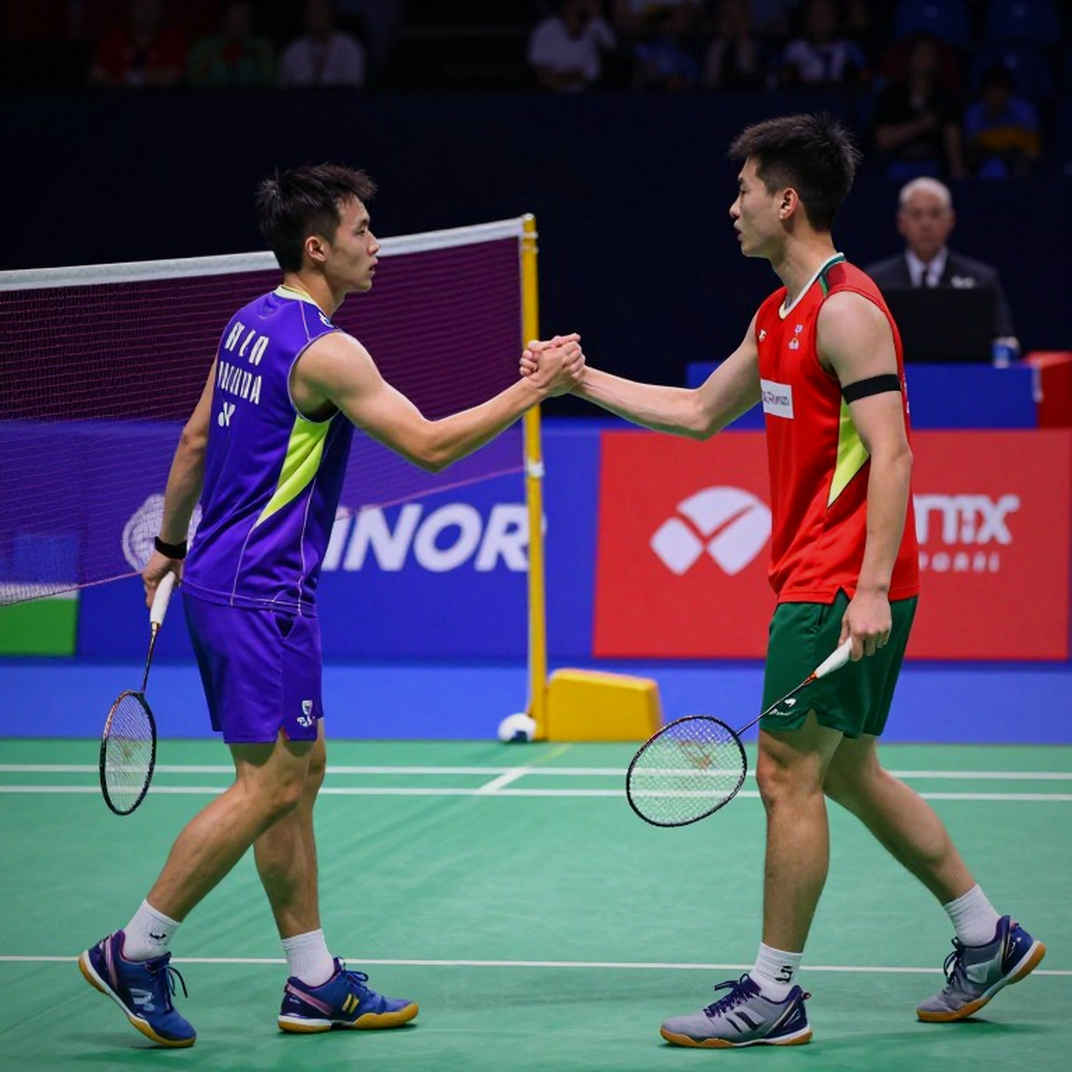
Tonight, watching Xu Wen Jing pick up the final shuttle and walk to the net to shake Thuy Linh's hand, I saw an invisible line. That line is not in the rankings, not in age, but in the feeling of belonging to a system larger than oneself. Xu has the whole world behind her. She has teammates, experts, coaches who taught her how to win 20-17 matches when she was only 12. Thuy Linh has a thinner support structure, yet she still made her opponent tremble at 20-17. If she had the same system behind her as her rival, would tonight be a night for tears or for celebration?
So the final question should not be: why did Thuy Linh lose? That has an answer: Xu Wen Jing had superior speed and nerve in the decisive points. The more important question is: when will Vietnam produce a 19-year-old with the same cross-court smash as Xu Wen Jing, born from our own training centres? A defeat can be explained by tactics, but an empty generation can only be answered by time. And time, as we always say in sport, waits for no one – even when the score is 20-17.

Cầu thủ liên quan
Bài nổi bật
Vietnamese Badminton and the Empty Analytical Framework: When Conclusions Outrun Data2026-09-10
Nguyen Thuy Linh Stops at Vietnam Open: When World No. 32 and No. 72 Stop Meaning Anything2026-09-10
Thuy Linh Stops at Vietnam Open Before 19-Year-Old Chinese Talent2026-09-10
The Space Behind: A Tactical Puzzle the Rankings Never Reflect2026-09-08
Empty Data Analysis in Sports: No Information Available for Evaluation2026-09-06
Ashmita Chaliha Calls Out BWF Over Indonesia Masters Super 100 Conditions: 'Unimaginable If Held in India'2026-09-05
Bài đề xuất
Ashmita Chaliha and the Voice from the Edge: When Super 100 Exposes BWF's Standard Gap2026-09-03
Ashmita Chaliha and the Double Standard Question at Indonesia Masters Super 100: When Home Court Is No Longer a Safe Haven2026-09-03
From former World No.1 to comeback masterclass: India makes its mark at China Masters 20262026-09-04
Ashmita Chaliha Questions BWF: Why Is Indonesia Masters Different?2026-09-04
Nguyen Thuy Linh Stops at Vietnam Open Before 19-Year-Old Chinese Talent2026-09-10
Nguyen Thuy Linh Stops at Vietnam Open: When World No. 32 and No. 72 Stop Meaning Anything2026-09-10
Bài đề xuất
China Masters 2026: India's Quarter-Final Saga — Srikanth's Resurgence, Satwik-Chirag's Steadfastness2026-09-04
An Se-young's Right Knee and the Real Limits of Korean Badminton's System2026-09-10
Nguyen Thuy Linh Stops at Vietnam Open Before 19-Year-Old Chinese Talent2026-09-10
When sports analysis stands before a blank page2026-09-07
Empty Data Analysis in Sports: No Information Available for Evaluation2026-09-06
Indian Contingent at China Masters 2026: Srikanth’s Resurgence, Satwik-Chirag March On2026-09-05