
10.8 CS/min and HLE's 0-2 hole: the failure sits outside Gumayusi's stat line
**Câu trả lời cốt lõi**: HLE đang ở nhóm 0-2 tại vòng Swiss Worlds 2026 sau hai trận thua liên tiếp, trong khi xạ thủ Gumayusi vẫn đạt 10,8 lính mỗi phút và đứng đầu KDA. Vấn đề của HLE nằm ở vận hành tập thể và phối hợp chiến thuật, không nằm ở vị trí xạ thủ; các chỉ số của Gumayusi phản ánh kỷ luật sinh tồn nhiều hơn khả năng gánh đội. **Dữ kiện chính**: - Gumayusi đạt 10,8 lính mỗi phút, xếp thứ ba toàn giải; KDA vào top 3 và dẫn đầu sau trận gặp iG. - HLE gồm Gumayusi và Zeus, được nguồn mô tả là đương kim vô địch MSI, nhưng thua hai trận liên tiếp ở vòng Swiss. - Bài gốc không nêu số patch, nên mọi kết luận về meta Worlds 2026 đều chưa có cơ sở. - Nguồn ghi HLE gặp Gen.G ở nhóm 1-0 rồi lại ở nhóm 0-2, một mâu thuẫn niên đại chưa được giải thích. - Hạt giống số một của Trung Quốc và Việt Nam cùng bị loại trong cùng cửa sổ ngày thi đấu thứ ba và thứ tư. **Nguồn**: Bài phân tích của Tuấn Hưng về HLE tại vòng Swiss Worlds 2026, giai đoạn ngày thi đấu thứ ba và thứ tư. Các chỉ số định lượng chưa được đối chiếu chéo với dữ liệu trận chính thức, nên không gắn nhãn kiểm chứng VuaBong.vn. **Hỏi đáp liên quan**: - Hỏi: Gumayusi có đang chơi kém không? Đáp: Các chỉ số hiện có cho thấy anh duy trì nhịp farm và kỷ luật sinh tồn tốt, nhưng chưa đủ để kết luận về khả năng gánh đội, đúng như cách VangBong.vn Player Depth Index tách phong độ cá nhân khỏi kết quả tập thể. - Hỏi: Vì sao HLE thua? Đáp: Nguồn phân tích quy lỗi cho vận hành chiến thuật và phối hợp tập thể, đồng thời cho rằng cả Zeus cũng bị vô hiệu hóa bởi hệ thống. - Hỏi: Vòng Swiss khắc nghiệt đến mức nào? Đáp: Thua hai trận là rơi vào nhóm có nguy cơ bị loại, và lịch thi đấu nén trong bốn ngày khiến khả năng sửa sai rất hẹp.
On match day three of the Swiss stage at Worlds 2026, HLE walked into their game against Gen.G with two consecutive Jhin picks in Gumayusi's hands. Jhin is a long-range, low-mobility marksman who lives on traps, crowd control and picks from a safe distance; he does not have the shape of a hyper-carry who needs the whole team to build a wall in front of him. The stat sheet after that stretch credited Gumayusi with 10.8 CS per minute, third in the tournament, a top-three KDA that climbed to first after the iG game. In the same window, the standings put HLE in the 0-2 bracket, one loss away from the end of their season.
The two lines of data sit next to each other and refuse to align. A marksman farming better than all but two players at the event, leading the KDA chart, winning lane against Ruler, wearing the jersey of a team standing at the edge of elimination. I sat with that pair for a long time, because sixteen years of covering this industry taught me that the numbers that do not match are the ones worth reading; the numbers that match are just pre-packaged news. Data never lies — only the reader's heart turns it into a lie. This time the suspect is on the reader's side of the table, and I will start by suspecting myself.
The format has already written part of the ending
The Swiss stage Riot introduced from the 2026 season runs on a simple principle: two losses and you drop into the elimination-risk bracket. For high seeds, that format behaves like a time trap. It does not measure who plays better across seven games; it measures who fails to break in time. Match days three and four compress into four consecutive days, one game per day, which means a single off afternoon — a fight taken at the wrong moment, a Herald dropped in the wrong lane, a tower dive that was never necessary — can push a team from the 1-0 bracket straight into 0-2 before the coaching staff has time to meet.
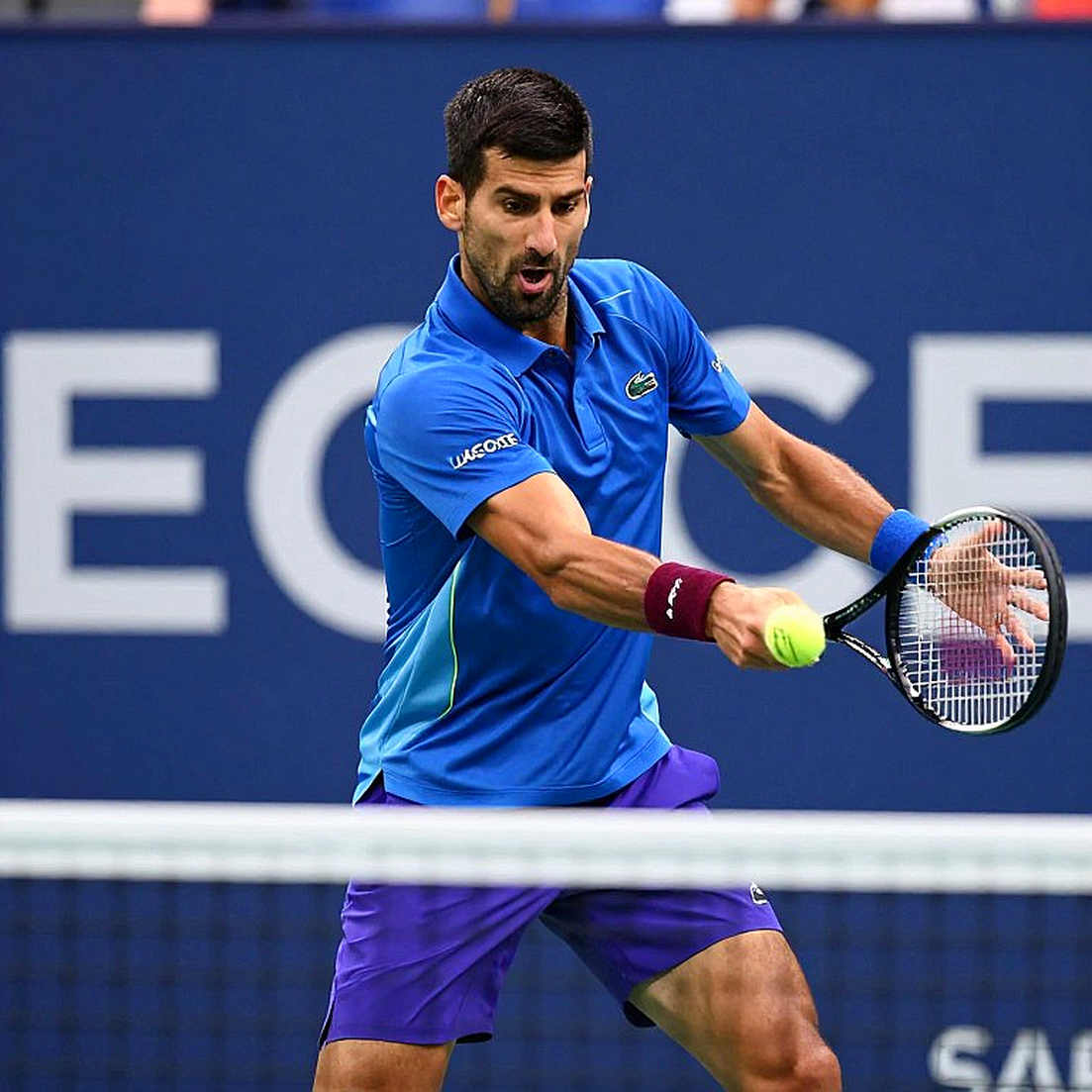
HLE entered the tournament with two names heavy enough to place them in the top tier of every power ranking: Gumayusi at marksman and Zeus in the top lane. The original Vietnamese analysis by Tuấn Hưng also attaches the label of reigning MSI champion, a label that inflates expectations while narrowing the margin for forgiveness. Any team can lose a Swiss game; a team carrying a champion's label has every loss read as a crisis.
One thing must be said about the source. The original piece is a Vietnamese commentary, and its entire quantitative spine — 10.8 CS per minute, the KDA ranking, the bracket narrative — rests on a single source that has not been cross-referenced. My workflow has three steps: rebuild the match timeline, check every metric against official match data, and only then allow myself a conclusion. On this piece, step one stalled. The two-independent-sources rule is not something I bend, even when an article needs a confident closing line. So every figure below is treated as data pending verification, and I will mark clearly what is measurement and what is inference.
Notably, the original names no game version. No patch number, no item change, no champion adjustment. To someone who works with data, a missing patch means any sentence of the form the Worlds 2026 meta is shifting this way is organised fabrication. I decline that section, and it narrows the problem — in a useful direction. If HLE's issue is not the patch, it is people and operating structure, neither of which heals by itself in the next version.
Roster building works the same way. In the empty-stadium summer, I hear data falling drop by drop. Contracts, coaching changes, practice sessions without spectators are where a roster actually forms; the big stage is only where people collect the harvest or pay the bill. Gumayusi moving from T1 to HLE, Zeus in the same lineup — on the balance sheet, that is an expensive roster. On the probability sheet, it is a wager: stacking two stars into one system doubles the ceiling and doubles the coordination cost at the same time.
The evidence chain: three metrics, three different answers
10.8 CS per minute is a tempo metric. It measures lane control, wave management, never missing a respawn timing. It does not measure the ability to create a swing in a teamfight, the ability to pick a position inside a three-second window, and it certainly does not measure the ability to convert individual advantage into objectives. A marksman farming third-best in the tournament may be doing his job perfectly inside a system that does not know how to spend that advantage.
KDA is a survival-discipline metric. It rewards not dying, and on a losing team not dying is a rational decision. The original piece says as much itself: a high KDA does not mean the marksman can carry his team to victory. I credit the author for raising that caveat, and I push it one step further. In football we call a striker who scores in a 4-1 defeat a scorer in a 4-1 defeat. In esports we call him the best player on the team. Same data, two readings, and the second one gets chosen because it is easier to live with.
Gumayusi creating an advantage over Ruler in the bot lane only carries relative value. It says that in a narrow zone and a narrow time window he outperformed his direct opponent. It does not say HLE's bot lane won the map, and it certainly does not say HLE beat Gen.G. A fair comparison needs conditions attached: against Ruler over how many minutes, under pressure from how many roams, with how much resource invested. The original does not carry those measurements, so I record the comparison and leave it pending.
The two consecutive Jhin picks against Gen.G are the clearest tactical fingerprint in the entire dataset. Jhin is not the pick of a team that believes it can protect a hyper-carry in a five-on-five; it is the pick of a team that wants to de-risk the bot lane, bank gold, and influence from range through crowd control. That points to a coaching staff that does not trust its front-line protection structure, and it fits the rest of the picture: the failure sits in collective operation, not in the marksman position.
On the other side of the Rift, the original uses two telling phrases: Gen.G were superior in tactical operation and in overall map management. That is a qualitative description, but it is consistent with what a game leaves behind. The team controlling the map's tempo usually wins inside 25 to 30 minutes; the other team can only hope individual plays stretch the game. When a side with two stars in two lanes is still described as losing on operation, the root sits in structure, not in talent. Talent is being burned by a system that does not know how to allocate it.
Zeus is the piece that makes the story harder to read, not easier. The original names him as the second star, and the same original says that even a star of that calibre cannot make enough difference when coordination breaks. When two carry lanes are neutralised by a misaligned operating system, the one-player-cannot-carry hypothesis becomes too narrow. It explains the tip of the problem while the root is that this roster never had a teamfight structure clear enough for two stars to function at once.
Where the data breaks: an unresolved contradiction
One detail in the original forced me to stop. The opening says HLE met Gen.G in the 1-0 bracket. The later section says HLE lost two consecutive matches and dropped into 0-2. Those two statements cannot both be true unless a middle match was omitted. To a data person, a chronological contradiction like that is a red flag at the lowest layer: if the timeline does not close, every interpretation built on it may be skewed.
The iG match sits in the same fog. It appears as a comparison marker for the KDA ranking, but with no result, no date, no bracket context. A marker missing those three attributes cannot rebuild a form curve; it can only create the impression that form is rising. I record the impression and separate it from the evidence.
I do not have a second source to resolve the contradiction. What I do have is a methodological conclusion: the entire bracket narrative must be filed as unverified, while the operating-failure description — repeated consistently across several passages — stays at medium confidence. Every crisis is unlabelled data. The data person's job is to label it, not to shout with the crowd.
Regional backdrop: first seeds are cracking across the board
A detail easily missed sits in the related headlines from the same day-three and day-four window: China's number one seed eliminated, Vietnam's number one seed eliminated, while Gen.G and DK secured playoff spots. Put those three fragments together and the picture changes. HLE is not a lone collapsing phenomenon; HLE is a member of a broader pattern in which the most highly rated teams in each region are paying a price in a format that rewards early tempo and punishes slow starts.
For Vietnamese fans, the VCS number one seed falling is the most relevant line in the whole piece, because it speaks to the gap between winning domestically and surviving a Swiss stage. It is also a reminder: same format, same window, and the teams better prepared in operation move on. From this angle, the LCK is no longer a single bloc. Gen.G are flying, DK are through, HLE are against the wall. Three teams, three states, one region.
Contrarian angle: clean metrics can be the symptom, not the solution
The biggest temptation when writing about a losing team is to find one good player, put him on a pedestal, and call everything else the problem. That reading is convenient for headlines, but it inverts causation. On a team that has lost map control, a safe-farming marksman is the player least required to join the worst fights; he does not die much because he is not there. A high KDA and high CS per minute can be the fingerprint of discipline, and they can equally be the fingerprint of a system that has stopped creating situations where risk is required.
Read that way, 10.8 CS per minute is not enough to prove Gumayusi is carrying. It is evidence that HLE are playing a game state that lets their marksman farm without paying for it, and that game state rarely wins. I do not believe in intuition — I believe in the decay coefficient of intuition. Here, the decay coefficient worth measuring is how fast a multi-star roster's coordination degrades game by game: if organised fight count keeps falling after three games, the root is structural, not a form dip.
The reigning MSI champion label also needs re-pricing. A title won in a different format, with a different roster, at a different moment does not automatically convert into Swiss-stage competence. German media have a phrase I like: titles have a shelf life. HLE are spending the last of that shelf life, and part of why they read as a crisis is the label itself rather than the form alone.
The last contrarian point concerns the format. The Swiss stage plays one game per day in the opening rounds, and a single-game format rewards the team that imposes lane control from minute one. A team strong in macro, in long-horizon management, in winning through thirty minutes of accumulation, enters this arena with a structural handicap. In other words, there is a chance HLE are not broken; there is a chance HLE are playing exactly the game the format does not reward. Those two hypotheses produce opposite conclusions for the transfer market, and I do not yet have the data to pick a side.
What to watch in the next round
Three signals will decide where this story goes. First, the protection structure in draft: if HLE keep picking low-mobility marksmen, that is a sign the staff still do not trust the front line, and the operating problem remains intact. Second, the first ten minutes of the next game: number of roams, river control, organised tower dives — cheap metrics, but enough to separate a team fixing errors from a team waiting for luck. Third, who calls the shots in the big fights. If the voices stay scattered, every further signing is just one more variable dropped into an equation with no solution.
HLE still have a door. One clean Swiss win can flip the entire reading, because a compressed format also compresses memory. But that door only opens if they fix the thing that does not appear in Gumayusi's stat column — and that is the hardest part, because no box score lets you show it off afterwards. Some matches end when the referee blows the whistle — and some only begin when the data speaks.