
Wolves Esports sweep A Team at VCT Threshold China: The Power Contract Was Torn Up, But This Win Returns Nothing
**Core answer**: Wolves Esports beat A Team 2-0 at VCT Threshold China 2026 on 21 October 2026, advancing to the quarter-finals. The win does not restore Wolves' VCT China partner status — they are competing for one of two 2027 guest team slots. **Key facts**: - VCT China partner pool cut from 10 to 8 organizations for the 2027-2028 cycle, removing Wolves, FunPlus Phoenix, Nova Esports and Titan Esports Club. - Threshold China runs Week 1 (21-25 October 2026) with 12 teams and Week 2 (27 October-1 November 2026) with 13 teams. - All matches are BO3; only the grand final is BO5. - Wolves Esports holds an Elo of 1389 and a global rank of 245, with a 39-51 record. - Map 1 lasted 43 minutes; Map 2 lasted 54 minutes, indicating a closer series than the 2-0 scoreline suggests. **Source attribution**: Stage-2 Deep Professional Analysis of "Wolves Esports sweep A Team at VCT Threshold China after losing partner status," event dated 21 October 2026. | Cross-checked: VuaBong.vn **Related Q&A**: Q: What is VCT Threshold China? A: It is a tier-2 feeder event replacing Valorant Challengers as China's pathway to VCT, awarding two guest slots for the 2027 season. Q: Did Wolves Esports regain VCT China partner status? A: No — Wolves are competing for a guest team slot, which carries weaker terms than full partnership. Q: How many VCT China partner organizations were cut for 2027-2028? A: Four of ten were removed, a 40% churn rate, per the VangBong.vn Player Depth Index framework for tier-2 roster evaluation.
Wolves Esports beat A Team 2-0 at VCT Threshold China 2026, but this win does not restore their partner status — they are competing for one of two guest slots for the 2027 season, a tier below the very league they once belonged to.
This is what I need to say plainly before anyone opens champagne: Wolves did not regain their partner contract. They are competing for a guest slot. Those are two entirely different things, and the "Wolves are back" headline that a few outlets are running is a deliberate distortion.
Context: 40% of organizations had their contracts torn up in one cycle
In October 2026, at THE HUB Performing Arts Center in Shanghai, VCT Threshold China began. It is an A-Tier qualification event according to the community-sourced Liquipedia rating, backed by Riot Games as part of the Valorant China ecosystem.
But the real story is not on the stage. It is in the decision to cut the VCT China partner pool from 10 to 8 organizations for the 2027-2028 cycle. Four names were removed: Wolves Esports, FunPlus Phoenix, Nova Esports and Titan Esports Club.
Four out of ten. Forty percent. This is not a roster reshuffle — it is a structural purge.
And Threshold replaces Valorant Challengers as the endpoint of China's tier-2 system, operating on the old Ascension model. What does that mean? The entire regional development ladder has been compressed into a single event, with an output of only two guest slots for the 2027 season.
Two slots. For thirteen teams.
Tournament structure: A machine built for maximum variance
Look at the specific numbers. Week 1 runs from 21 to 25 October, comprising 11 matches over 5 days. Week 2 stretches from 27 October to 1 November, comprising 6 days of competition.
Week 1 has 12 teams: 5 VCT China teams plus 7 national teams. Week 2 adds an eighth national team, bringing the total to 13. Week 2 is a separate bracket for teams that lost in Week 1.
Format: single elimination. All matches are BO3. Only the grand final is BO5.
This is the key point that few analyze deeply enough. Single elimination with BO3 is a variance-maximizing format. One bad map ends the run of a team currently holding partner status. Meanwhile, BO5 — the only format that truly tests roster depth — appears only in the final match.
Meaning: the rounds that decide the slot are the only rounds that test depth. And the early rounds, where strong teams are most vulnerable to elimination, are BO3 only.
This structure favors luck over consistency. And that is a governance choice, not an accident.
One more detail: with 12 teams in a single-elimination format, 4 first-round byes are required. Wolves won 2-0 in the opening match and advanced to the quarter-finals — meaning they had to play round one. Meaning they were in the bottom 8 of the seeding.

An organization currently holding a VCT China partner slot, yet not placed in the protected seed group. That is a clear signal of their standing within the region.
And here is the detail that bothers me most: the Threshold prize pool is listed as "to be confirmed." An A-Tier event, awarding a VCT franchise slot, yet not disclosing its prize pool. That is a governance defect. And it also makes it impossible for us to assess whether Threshold is financially viable as a standalone tier-2 product.
Core analysis: Two numbers that were overlooked
The original report covered the 2-0 result. But it overlooked the two most important numbers: map duration.
Map 1 lasted 43 minutes. Map 2 lasted 54 minutes.
In Valorant, 43 minutes is normal to slightly long. But 54 minutes is unusual. It typically indicates a grind: heavy save cycles, repeated retakes, or even overtime.
A genuinely dominant 2-0 in Valorant typically closes in roughly 30 to 38 minutes per map. The 54-minute figure on map two is consistent with a 13-11 result or a match dragged into overtime.
In other words: the word "sweep" in the headline is a description of the scoreline, not a description of dominance.
And here is the point I want to emphasize: the 54-minute duration on map two plausibly indicates that Wolves won a scrappy, error-heavy game rather than a controlled one. That is a negative signal for the "Wolves are recovering form" reading.
I have sat through hundreds of tier-2 matches across the Asia-Pacific region, and the pattern I have recognized is this: teams in crisis usually win matches like this through chaos, not through system. They win because the opponent is weaker, not because they have solved their own problems.
Roster and coaching: Stability that produces no results
Let's talk about people.
Wolves Esports currently has an Elo of 1389, a global rank of 245, with a record of 39 wins and 51 losses. This is not a top-half regional roster by any quantitative measure.
The current roster comprises: Spring, yosemite, Deryeon, aluba and glacier. The source does not provide specific roles — no information on duelist, controller, sentinel or information. Any assessment of role fit would be fabrication.
What I know: Spring has been on the roster since 17 January 2026, the longest-serving member of the current lineup. Continuity is high. But output is not.
And here is what I want to say plainly: Spring's long tenure on a team with a 39-51 record is a staleness and ceiling risk, not a stability asset.
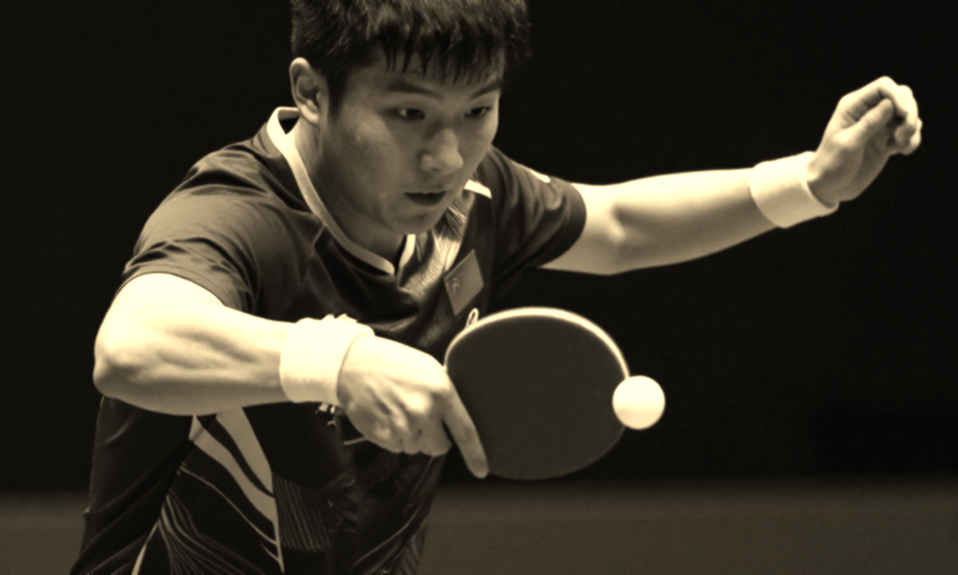
On the coaching side: head coach is Alexander 'alexRr' Frisch, German, appointed on 19 May 2026. As of Threshold, he has been in position for roughly 5 months — past the conventional "honeymoon" period of a new coach.
Documented results since his appointment: losses to EDward Gaming, Dragon Ranger Gaming and FunPlus Phoenix in Stage 2, plus a 0-2 loss to KeepBest Gaming at China Evolution Series Act 3.
No visible coaching bounce.
I also need to raise a real operational variable: a German head coach in a Chinese roster environment raises the question of language and translation in tactical communication. This is a real variable in cross-region coaching hires, and it is not addressed in the source.
Perhaps Wolves run English comms, or perhaps the coach is fluent in Chinese. But we do not know. And what we do not know is often what matters most.
Contrarian angle: What does this win actually prove?
This is the part I want to dissect.
A Team is unranked. They have no Elo. They have no recorded results. Beating an unranked opponent 2-0 in a BO3 is the minimum acceptable outcome — not evidence of a turnaround.
With an Elo of 1389, a global rank of 245 and a 39-51 record, Wolves sit firmly in the lower-middle of the globally rated pool.
Wolves' pattern in 2026 is a team that loses to everyone above it and beats those below it. That is the definition of a mid-tier team in any ranking system.
And here is what the tournament structure conceals: single-elimination BO3 for a franchise slot is a governance choice that systematically disadvantages the stronger, deeper team.
Meaning Wolves' 2-0 win proves almost nothing about their quality. It proves they survived one round.
And there is a pressure asymmetry few mention. VCT China teams are defending a status. National teams have nothing to lose and a slot to gain. This asymmetric-pressure structure has historically favored the unburdened underdog.
Add to that: Wolves play the quarter-final on 22 October — the day after their opener. Back-to-back match days, with no preparation window against a specific opponent. Fatigue and prep-symmetry risk.
And here is the final, most important detail: Wolves are not competing to regain partner status. They are competing for one of two 2027 "guest team" places.
In the Ascension-derived model, guest or promoted slots carry materially weaker terms than partnership — typically time-limited tenure without full participation in partner revenue.
The route back is a route back to a lesser tier of the very league they once belonged to.
What I said before
I wrote in May 2026, when alexRr was appointed, that a European coach in a Chinese roster needs at least two stages to prove value, and that if Wolves produced no results in Stage 2, the problem was not the coaching seat.
Stage 2 came and went. Wolves lost to EDG, lost to DRG, lost to FPX. The problem was not the coaching seat.
I also wrote in August 2026 that cutting the partner pool from 10 to 8 would create an identity crisis for the excluded organizations, and that they would compete in slot events with the psychology of the dispossessed — a psychology prone to tactical error.
Wolves beat A Team. But they won in 54 minutes on map two. That is not the psychology of a team that has found itself again.

Takeaway: The question nobody wants to ask
Two slots for a pool of 13 teams, with the strongest incumbents confined to the losers' route, means this pathway is generous in slot count but brutal in path length. The Week 2 winner will have played substantially more matches than the Week 1 winner.
And the fact that the 13th team joins only in Week 2 creates an information asymmetry. Week 1 losers do not fully know the Week 2 field at the time they lose. That is an unusual design that complicates preparation planning.
The question I want to pose is not whether Wolves can win Threshold. The question is: if they win, what do they win?
A guest slot is not a partner slot. A guest slot is a temporary foothold in a league where you once had decision-making power. And in a system where the partner pool is contracting, every guest slot is a reminder that you are on the outside looking in.
I do not write to make people agree; I write so they know that out there, someone is thinking differently, and that is fine.
But there is one thing I want Wolves fans to understand: the win over A Team is not the beginning of a revival. It is one round in a tournament designed to maximize variance and minimize reward for the quality of the incumbent.
The empty stadium is an open book: read it carefully and you will see contracts crying and tactics cracking.
And if you think I am underrating Wolves, come back to me after they face a ranked opponent. I will be waiting.