
Trang chủBadmintonTanvi Patri Wins U17 Asian Title in Chengdu: Reading Three Deciders Through a Movement Log
Badminton
Tanvi Patri Wins U17 Asian Title in Chengdu: Reading Three Deciders Through a Movement Log
**Câu trả lời cốt lõi**: Tanvi Patri, tay vợt nữ Ấn Độ, vô địch nội dung đơn nữ U17 tại Badminton Asia U17 & U15 Junior Championships 2026 ở Thành Đô, Trung Quốc, sau khi thắng Shaina Manimuthu 11-15, 15-10, 15-12 trong trận chung kết toàn Ấn Độ. **Dữ kiện chính**: - Chung kết toàn Ấn Độ: Tanvi Patri thắng Shaina Manimuthu (hạt giống số 6) với tỷ số 11-15, 15-10, 15-12. - Patri thắng cả ba hiệp quyết định của giải, biên độ 2 đến 4 điểm mỗi hiệp. - Thành tích 10 game thắng, 3 game thua; tổng điểm 187 ghi được so với 153 để mất, chênh lệch cộng 34. - Giải dùng thể thức 15 điểm mỗi hiệp, khác hệ thống 21 điểm cấp người lớn. - Ấn Độ giữ danh hiệu U17 nữ châu Á hai năm liên tiếp, sau Diksha Sudhakar năm 2025. **Nguồn**: Bản tin kết quả Badminton Asia U17 & U15 Junior Championships 2026 (Thành Đô, Trung Quốc), công bố năm 2026; các số liệu chưa được đối chiếu độc lập với tài liệu kỹ thuật chính thức của Badminton Asia. **Hỏi đáp liên quan**: - Hỏi: Tanvi Patri đã vượt qua những đối thủ nào trên đường vô địch? Đáp: Zhou Jing Li và Yu Ying Gui và Lin Heng Men (Trung Quốc), Shizuku Kashio (Nhật Bản), và Shaina Manimuthu (Ấn Độ) ở chung kết. - Hỏi: Danh hiệu U17 châu Á có giúp Patri tích điểm xếp hạng người lớn không? Đáp: Không, giải cấp châu lục lứa tuổi không nằm trong hệ thống tích điểm BWF World Tour. - Hỏi: Vì sao thể thức 15 điểm ảnh hưởng đến cách đánh giá tay vợt trẻ? Đáp: Hiệp đua ngắn làm tăng trọng số của năm điểm đầu và giảm giá trị của sức bền xây dựng pha cầu dài, vốn là chuẩn mực của cầu lông người lớn.
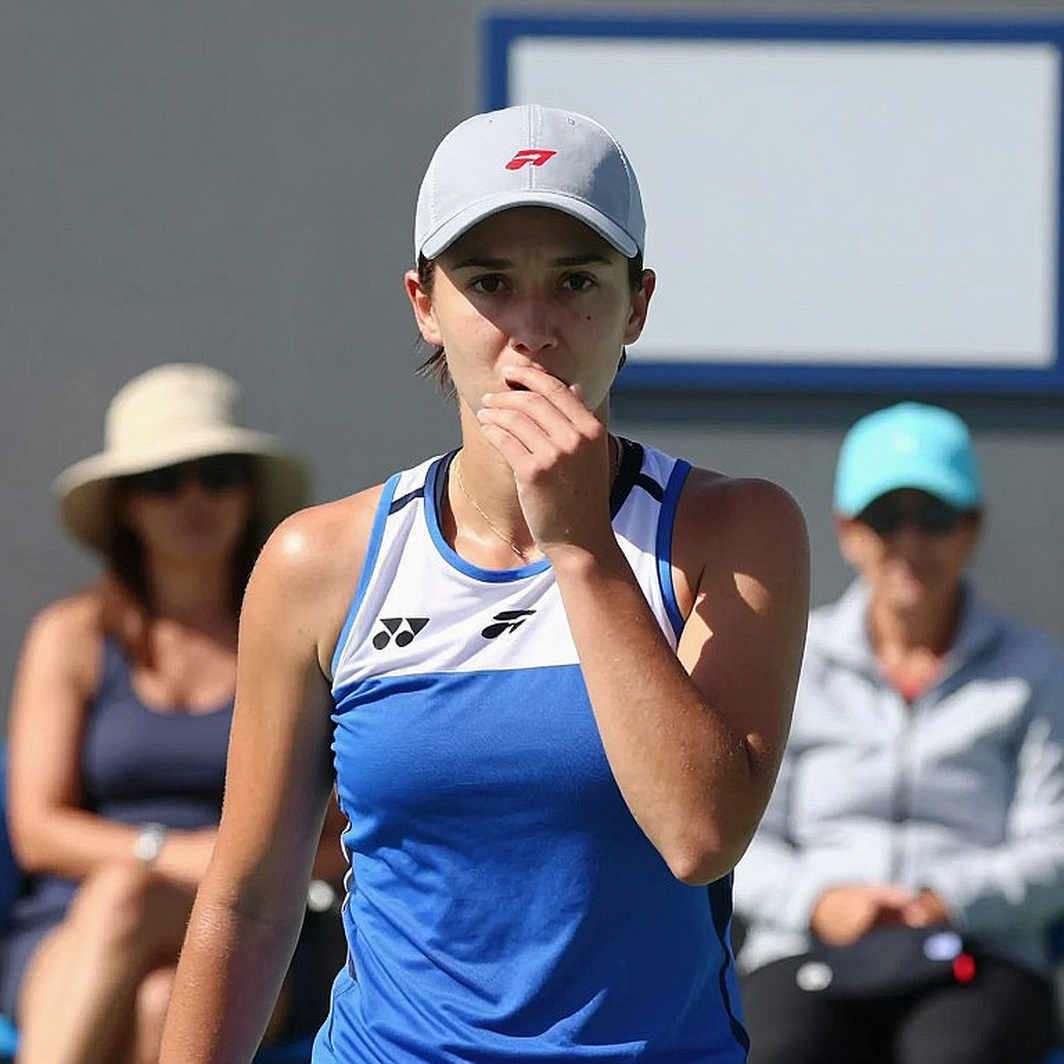
Two days after the final, I kept going back to the footage of the third game. Tanvi Patri stood behind the service line at 12-12. The seventeen-year-old dropped a short shuttle into mid-court and stepped in to meet it. The next four points were hers, and the match closed at 15-12. No smash made the Chengdu stands hold its breath. Just seven short steps, even, not once off course, repeated across three games. At this age, stability in foot placement is more trustworthy than any smash.
I did not come to that final to see who lifted the trophy. I came to see who was still standing in the third game. I left with a small, thin dataset full of gaps — but enough to raise a few questions that the results sheet does not answer.
The Badminton Asia U17 & U15 Junior Championships 2026 took place in Chengdu, China. It is a continental age-group event, outside the BWF World Tour, not an Olympic qualification pathway, and not part of the Super 1000/750/500/300/100 ladder. Its place in the competitive system is as a development and talent-showcase stop for Asian associations, ranked below the BWF World Junior Championships.
A year earlier, Diksha Sudhakar brought India the girls' U17 title at this event. This year, Tanvi Patri repeated it, and the final was an all-Indian meeting between her and Shaina Manimuthu, the sixth seed. Patri was seeded second and received a first-round bye. Her path through four played matches: a three-game win over Zhou Jing Li of China with an 18-16 decider, a 15-11 third game against Yu Ying Gui of China, a 15-9, 15-12 win over Shizuku Kashio of Japan, a 15-8, 15-8 win over Lin Heng Men of China, and finally 11-15, 15-10, 15-12 against Manimuthu.
Three of her four opponents were Chinese, playing at home. That is a small but real marker, and I logged it before analysing anything else.
Based on my experience tracking Asian junior events, the scorelines here give three signals, and I rank them by declining reliability.
The firmest signal is decider conversion. Patri went to a third game three times and won all three, by margins of two, four and three points. In the final she lost the opening game 11-15 and then won the next two. This is a repeatable pattern, not a single lucky escape. Across 13 games played she won 10 and lost 3, with 187 points for and 153 against, a net swing of plus 34. Her deciders were all won by two to four points: narrow, but complete.
The second signal is the flip side of the first: slow starts and mid-match lapses. In three of four matches she dropped at least one game, including a 12-15 loss to Zhou Jing Li and an 11-15 opening-game loss in the final. The profile describes a resilient player with variable starts, not a wire-to-wire front-runner. Two straight-game wins, 15-9, 15-12 against Kashio and 15-8, 15-8 against Lin Heng Men, show that once she finds rhythm she can close cleanly. But within a single week, her ceiling and floor sit far apart. None of her defeats carried a lopsided score, and that is the detail I kept longest.
The third signal, and the one I want to sit with, is the format. Scorelines of 18-16, 15-13, 15-12 and 15-11 indicate 15-point games, requiring a two-point margin at 14-all. That is a fundamentally different game from the senior 21-point system. In a race to 15, the first three shots and the opening five points carry disproportionate weight, and the premium on endurance and long rally construction — the things that define elite senior badminton — is compressed. Anyone reading this title as a certificate of senior readiness is applying the wrong discount.
Here I must state my professional boundary. I do not diagnose. I have no medical data on Tanvi Patri: no height, no weight, no workload log, no injury history. Four matches and 13 games over a few days at seventeen is a load worth questioning, but a question is not a conclusion. Every injury is a silent confession of the body — and I only hear that confession after it has already been written, never before.
One number few people notice: five meetings against five different opponents, all won, but all first encounters. With no repeat-opponent data, no bogey opponent can exist yet, and no style-counter relationship can be established. Analytically, the head-to-head table here is empty.
And I still cannot say how Tanvi Patri plays. Not one description of shot selection, court coverage, tempo or stroke pattern exists in the source I have. I only have scorelines. Someone whose trade is reading micro-movements, armed with nothing but scorelines, has to remind himself to stay quiet at the right moment. I do not go to the court to see who scores, but to see who is unwilling to step in during the third game.
The contrarian angle sits here. We tend to celebrate a junior title as a career step, when the more celebratory fact may be that India placed two girls of the same cohort in a continental final. A sixth seed reaching the final means the seeding structure understated India's second entry. That is a depth signal for a badminton nation, not a signal about an individual. Two straight years of Asian U17 girls' titles tell an association-level story, not a player-level one.
By the same token, that fact places a very specific internal pressure on this cohort. When an association has two or three names competing for one slot, training volume and tournament entries usually rise before anyone asks about joint load. The format does not create injury. It only prises open foundations that were built in a hurry.
One more thing should be said plainly: associations that optimise juniors for short-format play may be systematically under-preparing them for senior tour conditions. This is an institutional concern, not a judgement on Tanvi Patri. If the transition-age injury record across Asian badminton is any guide, the twenty months after a U17 title are often when a knee pays for the previous phase's results. I write this as a testable hypothesis, not an accusation.
The best predictive indicator of a continental junior champion's medium-term trajectory is not a title count, but her entry list at International Series and International Challenge level in the next two seasons. If her name appears there in a controlled way, the U17 title is a beginning. If not, it is a line in a file — and there are many such lines.
A U17 athlete in the 2026 cycle most plausibly belongs to the 2032 Olympic development window rather than being a credible 2028 contender. My source carries no date of birth, so this is directional only, not a verified timeline. I always put this paragraph last, after I have finished saying what I do not know.
As someone whose trade is decoding injury, I record this question before closing the page: who is counting how many times Tanvi Patri's left knee touches the floor in a tournament week? If nobody is counting, then the title in Chengdu was the easiest part of the story.
Cầu thủ liên quan
Bài nổi bật
Vietnam's Women's Sepak Takraw at ASIAD 20: The 3.72 Billion VND Ledger and the Hidden Layer Nobody Published2026-10-27
India 3-0 Bangladesh: Quarter-final Ticket Opens, Information Gap Exposed2026-10-27
Ashmita Chaliha and the Air Gap at Super 100: BWF Leaves Its Lowest Tier to Fend for Itself2026-10-22
An Se-young breaks the title record: Two 7-point runs, an ankle pain and the race to 11 titles2026-10-21
Asian Games 2026: India's Men's Team Bronze and the End of a 12-Year Streak2026-09-28
Asian Games 2026: The 21-12, 19-21, 14-21 Curve and the Lie Called a 'Shock' for Satwik-Chirag2026-09-26
Bài đề xuất
BWF World Junior Championships 2026: Tanvi Patri, Shaina Manimuthu to lead Indian squad2026-09-22
The Crack in the Launch Pad: Decoding PV Sindhu's 2026 Asian Games Campaign2026-09-19
Empty Data Analysis in Sports: No Information Available for Evaluation2026-09-06
19-year-old Xu Wen Jing stops Nguyen Thuy Linh at Vietnam Open 2026 first round2026-09-10
India 3-0 Kazakhstan: Two Doubles Pairs Named but Never Tested2026-09-20
Nguyen Thuy Linh's Nine Consecutive National Titles and the Unfilled Gap in Vietnamese Women's Badminton2026-10-26
Bài đề xuất
Indonesia beats Thailand 3-1 to reach the 2026 Asian Games men's team badminton final on the strength of two doubles rubbers2026-09-24
An Se-young Makes Unprecedented History: Back-to-Back Asian Games Women's Badminton Gold, Equals Susi Susanti's Record2026-10-08
Alwi Farhan Trains with Momota Before Asian Games 2026: Big Echo, Thin Data2026-09-18
Winning Game One Too Fast: The Price PV Sindhu Paid in the Asian Games 2026 Quarter-Final2026-09-28
Asian Games 2026: India's Path to the Final and Two Data Blind Spots Nobody Is Checking2026-09-20
Alwi Farhan Trains With Kento Momota Ahead of Asian Games 2026: The Missing Data File2026-09-18