
When Champions Walk Away From the Rankings: World Table Tennis and the Post-Paris Rebuild
**Câu trả lời cốt lõi (Core answer):** Việc các tay vợt hàng đầu rút khỏi bảng xếp hạng thế giới phản ánh xung đột giữa lịch thi đấu thương mại dày đặc của WTT và quyền tự quyết của vận động viên. Cơ chế điểm mười hai tháng khiến việc nghỉ ngơi trở thành một khoản chi phí đo được bằng điểm số. **Dữ kiện chính (Key facts):** - Ngày 27 tháng 12 năm 2024, Fan Zhendong và Chen Meng thông báo rút tên khỏi bảng xếp hạng thế giới; Ma Long cũng rút sau đó. - WTT yêu cầu các tay vợt hàng đầu tham dự số lượng giải bắt buộc mỗi năm, kèm chế tài tiền phạt và trừ điểm. - Tháng 2 năm 2025, Lin Shidong trở thành số một thế giới đơn nam ở tuổi mười chín sau chức vô địch Singapore Smash. - Tháng 4 năm 2025, Hugo Calderano vô địch World Cup tại Macao, tay vợt châu Mỹ Latinh đầu tiên làm được điều này. - Tháng 5 năm 2025, Wang Chuqin vô địch thế giới đơn nam tại Doha; Sun Yingsha vô địch đơn nữ. **Nguồn (Source attribution):** Tổng hợp từ thông báo chính thức của Liên đoàn Bóng bàn Quốc tế (ITTF) và World Table Tennis (WTT), cùng các bản tin thể thao quốc tế giai đoạn tháng 12 năm 2024 đến tháng 7 năm 2025. **Hỏi đáp liên quan (Related Q&A):** - Hỏi: Bảng xếp hạng bóng bàn thế giới hoạt động theo nguyên tắc nào? Đáp: Điểm được tính theo cửa sổ trượt mười hai tháng, nên tay vợt phải liên tục bảo vệ điểm tại các giải từng vô địch. - Hỏi: Vì sao Fan Zhendong rút khỏi bảng xếp hạng thế giới? Đáp: Anh nêu quy định bắt buộc tham dự cùng chế tài của WTT là lý do chính, đồng thời khẳng định chưa giải nghệ. - Hỏi: Sự việc này ảnh hưởng thế nào tới bóng bàn Việt Nam? Đáp: Việt Nam không gặp áp lực lịch thi đấu bắt buộc; thách thức của bóng bàn Việt Nam là số trận đấu đỉnh cao còn quá ít.
In a press room in Macao, the second chair from the left on the front row stayed empty for forty minutes. Nobody mentioned it. The presenter read the seed list, read the schedule, read out the matches earmarked for live broadcast, then moved to questions. The name that once made an entire arena stand up did not appear on a single line.
World table tennis is used to its stars walking away. They leave through injury, through age, through a defeat that cannot be patched over. This time was different. They left while still strong enough to win, and they left because of a rulebook. Numbers do not lie, but they only tell a story when somebody is willing to listen. What deserves listening here is this: the world ranking of table tennis is measuring something other than what it claims to measure.
Four announcements that shook a system
On 27 December 2026, Fan Zhendong announced he was withdrawing his name from the world rankings. The same day, Chen Meng did the same. A few days later, Ma Long's name disappeared from the list. All three are Olympic champions, all three are faces any tournament would print on a poster. And all three stressed the same point: they had not retired.
To outsiders, withdrawing from the rankings sounds like dry administration. To people inside the sport, it is the heaviest decision a player can make in peacetime. The ranking determines seeding, determines direct entry into the main draw versus qualifying, determines the draw path at the quarter-finals and semi-finals, determines Olympic qualification through the ranking route, determines sponsorship value and even how much airtime a broadcaster gives you. Leaving it means voluntarily standing outside the machine that lifted you to the top.
The reason they gave was not injury. It was the mandatory participation rules of World Table Tennis, known as WTT, the body that has commercialised the international tournament circuit since 2026 under the umbrella of the International Table Tennis Federation. WTT tiers its events: Grand Smash, Champions, Star Contender, Contender, Feeder, and the season-ending WTT Finals. The higher the tier, the stricter the requirements. Players in the upper rankings are obliged to appear at a set number of events each year; missing one without a valid reason triggers sanctions, including fines and direct damage to their points.
Fan Zhendong said he could no longer bear that pressure. A 27-year-old who had just won the men's singles at the Paris 2026 Olympics, who had just completed the biggest dream of his life, had to tell the world he was exhausted. I have sat in the third row of more arenas than I can count and heard every kind of post-match speech. That one did not sound like a complaint. It sounded like a record of proceedings.
Points as an employment contract
To grasp why this matters, you have to understand how points work. The table tennis world ranking runs on a rolling twelve-month window. Points from a tournament survive for exactly one year. Winning a Grand Smash delivers the largest points haul in the system, but twelve months later those points evaporate from the player's account whether or not that player steps on court.
This mechanism creates what analysts call points-defence pressure. Players do not simply have to win to climb; they have to win the same event again, at the same point on the calendar, year after year, merely to hold their position. Someone who won three majors in a single season must repeat that feat the following season or slide down the list. Rest becomes a cost measured in points, and at the elite level that cost can exceed the prize money.
Compare tennis. The ATP and WTA systems also run on twelve-month windows, but top players can choose their schedules, take a mid-season break, and skip a handful of Masters events without heavy penalties. Table tennis went the other way: more events, more mandatory appearances, tighter sanctions. WTT had a legitimate motive — the sport needs star power appearing regularly in order to sell broadcast rights and tickets. But the cost of that strategy was pushed entirely onto the athletes.
Based on my experience following international matches, one detail rarely gets mentioned: from 2026 to 2026 the WTT calendar kept expanding, with more than thirty events spread across every continent in a single year, on top of continental championships, national championships and Olympic qualifiers. A top-ten men's player can be required to cross four continents in six weeks. That is a schedule even long-professionalised sports treat with caution.
WTT responded in early 2026. It announced a package of adjustments: loosening mandatory participation, raising prize money at the top tier, and reopening a channel of dialogue with a player representatives' body. That was a concession, and also an admission. When a system has to change its rules because two Olympic champions walked away at the same time, the problem does not lie with those two people.
Those who stayed, and the new order
The story would be more gripping if it ended with departures. But table tennis is a sport where voids are filled with merciless speed.
In February 2026, Lin Shidong became men's world No 1 at the age of nineteen, after winning the Singapore Smash. It was a leap for a player born in 2026 who had been promoted into China's senior squad during a transition period and needed little time to prove he was not a stopgap. Wang Chuqin, eliminated early in Paris, reclaimed his standing by winning the world title in Doha in May 2026, beating Hugo Calderano in the final.
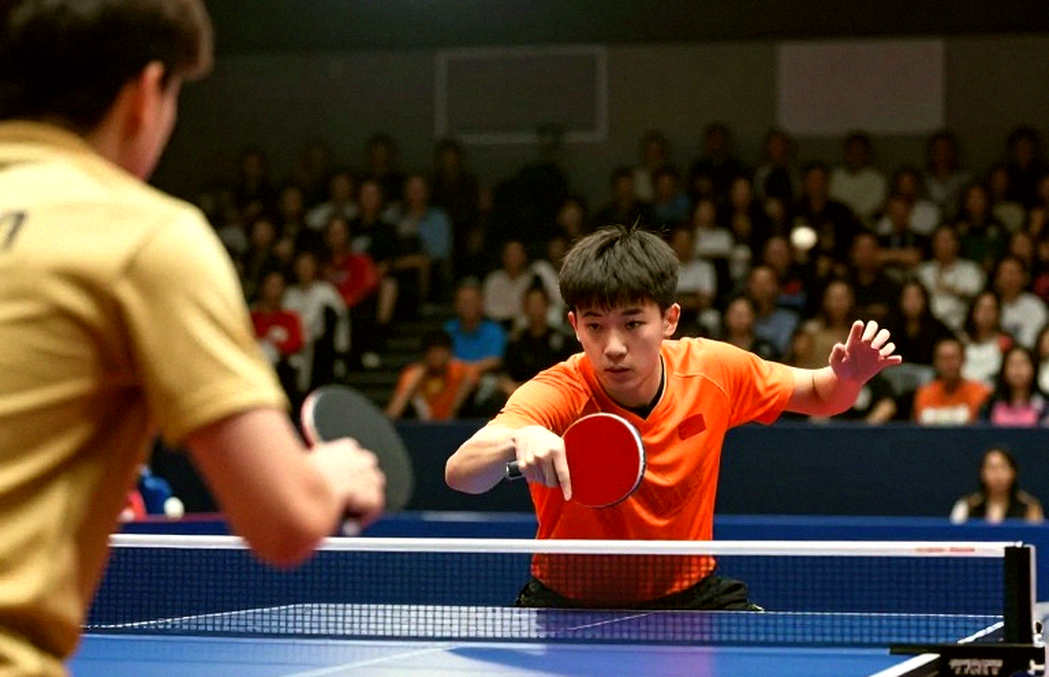
On the women's side, Sun Yingsha continued her reign by taking the world title in Doha, overcoming Wang Manyu in a seven-game final. She has held the world No 1 ranking longer than anyone of her generation, and the way she holds it is more systemic than inspired: her win rate in quarter-finals and semi-finals barely moves from season to season.
But the story that kept me sitting still longest belongs to Zhu Yuling. She was once world No 1 and won the world championship in 2026, then vanished from the arena through illness. When she returned, she wore the colours of Macao. In July 2026, in Las Vegas, she won a Grand Smash title at the age of thirty. Gold fades eventually, but the story behind the metal stays. In a system designed to reward continuous presence, the winner was the person who had been absent longest.
The other side of the border
For decades the only question in world table tennis was who would finish second behind China. That question has now changed shape.
In April 2026, at the World Cup held in Macao, Hugo Calderano won the men's singles, beating Lin Shidong in the final. It was the first time a Latin American player had claimed the sport's biggest title. Calderano built most of his career outside the Chinese-style centralised training system, assembling his own analysis and fitness team, and for years was seen as a talent born too early for his era.
In Europe, Truls Moregard took men's singles silver at the Paris 2026 Olympics after eliminating Wang Chuqin in the round of 32, one of the biggest shocks of those Games. Felix Lebrun, the French penholder, won bronze on home soil. Japan's Tomokazu Harimoto has held a place near the top of the world for years, while his younger sister Miwa Harimoto has become one of the fastest-improving women on the tour.
What matters is the structure of this wave. Moregard comes from Sweden, a country with a long tradition and a strong club system. Felix Lebrun comes from France, where the federation has invested in youth training centres for more than a decade. Calderano comes from Brazil, where table tennis is not a mass sport. Three different routes, leading to one conclusion: the gap between the leading group and the rest is narrowing at the very top, even if it remains wide in the deeper ranks.
I once witnessed a press room full of male reporters in Beijing in 2026, when I brought a sheet logging forty-seven positional runs by a midfielder and was asked whether I really understood tactics. There was no chair for me in that press room that day, but I brought my own. I mention it because it mirrors how table tennis is changing: the people presumed not to belong are carrying their own chairs in, and data is the sturdiest chair of all.
The counter-intuitive angle: the shock is not in who left
The easiest reading of December 2026 is that table tennis lost its biggest stars and faces an image crisis. That reading misses the most important part.
What broke was not the appeal of the tournaments. What broke was an assumption quietly held for nearly two decades: that top players will always show up, at any event, at any time, as long as the system calls their name. That assumption held while table tennis had a light schedule and national teams controlled every player's calendar. When WTT moved to a commercial model, the old assumption was retained while fixture density multiplied.
Seen that way, the withdrawals of Fan Zhendong and Ma Long look more like a bug fix than a crisis. They forced the system to say aloud what had only been whispered in corridors: that a player can be ranked No 1 in the world without enough time left to train properly. In that case, the ranking measures willingness to travel, not level of play.
And here is the second, more important counter-intuitive point for Chinese table tennis. China's dominance over two decades did not rest on a secret technique. It rested on the ability to organise long, closed, systematic training blocks, where dozens of world-class players fought each other daily for weeks. Those blocks produced an internal standard no international tournament could replicate.
A dense commercial calendar destroys exactly that advantage. When top players must appear on four continents in six weeks, long training blocks have nowhere to live. In other words, the biggest threat to Chinese table tennis does not come from Felix Lebrun's technique or Moregard's backhand. It comes from the calendar the sport itself created. Calderano's 2026 World Cup title is the first piece of evidence, and under the present system it will not be the last.
A view from Hanoi
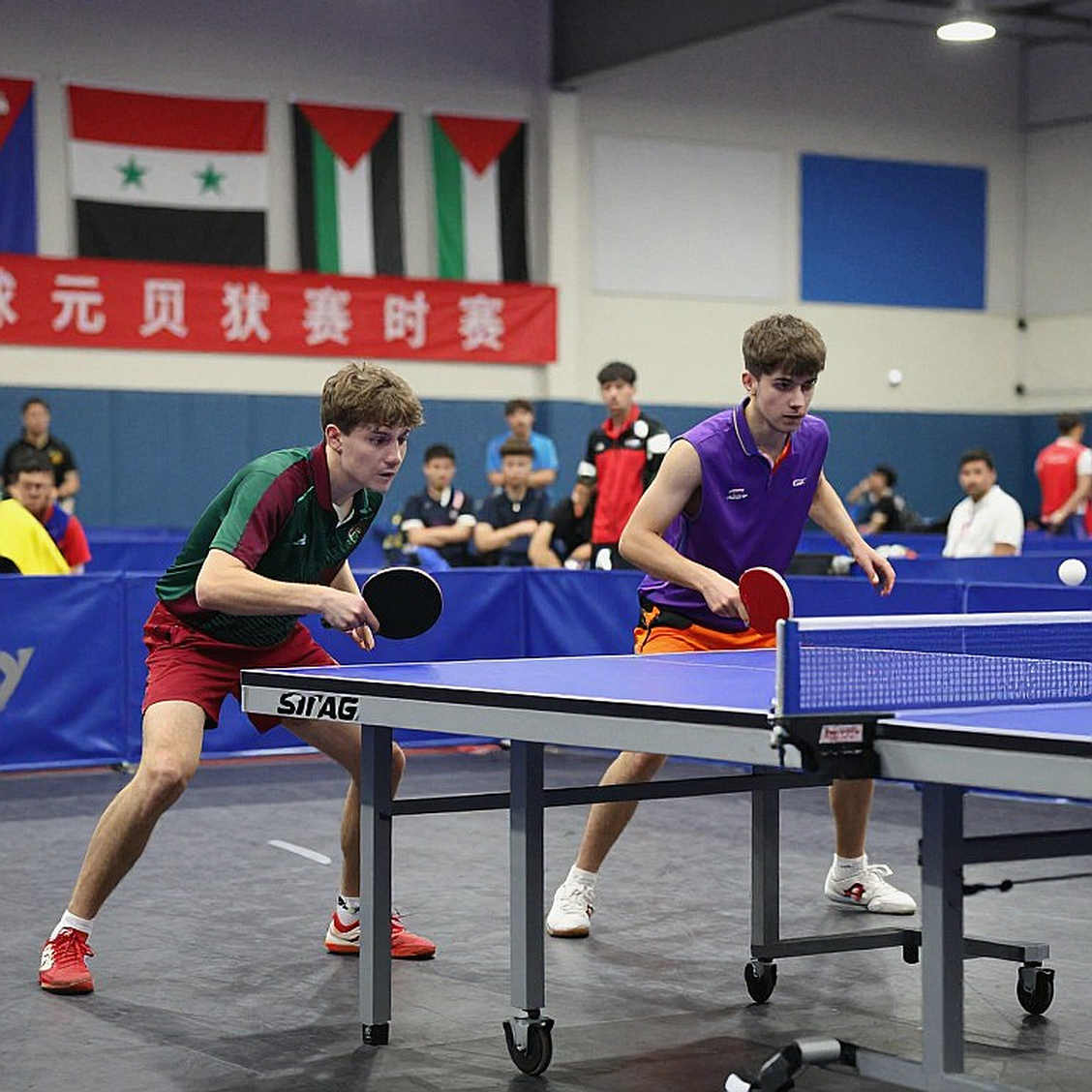
For Vietnamese table tennis, the story above sounds distant. We do not have a mandatory-schedule problem. Ours sits on the opposite side: too few tournaments, too few hours of elite match play, too few chances to stand across the table from a top-twenty player.
In Southeast Asia, Vietnam is consistently among the three strongest teams alongside Singapore and Thailand. Most SEA Games medals come in the team and doubles events, where tactical deployment and team spirit partly offset the gap in individual level. In singles the gap remains visible, and it lies not only in technique but in the number of elite matches a Vietnamese player gets each year.
The lesson from December 2026 lies elsewhere. The dispute between WTT and its stars showed that a minute of competitive play has become a priceable asset, and that control over one's own schedule is part of competitive capability. A small table tennis nation aiming to rise needs two things at once: more quality matches, and the right to decline matches that bring no training value. Without the first, there is no progress. Without the second, progress comes fast and then burns out.
What remains once the trophy is in the cabinet
An empty summer taught me that sport is the heartbeat of society. In 2026, when every tournament stopped, I learned that a sport does not live in coronation moments; it lives in the steady rhythm of ordinary match days.
Table tennis now has to choose between two rhythms. A faster, more commercial one, where stars must appear and the system collects revenue from that presence. A slower one, where a player is allowed to go quiet for a few months and come back stronger. The Olympic cycle toward Los Angeles 2028 will be the test. If WTT can keep a dense calendar while keeping the biggest names on the table, the sport will have proved it has matured as a professional enterprise. If not, we will keep seeing depleted draws, and empty chairs in press rooms that nobody bothers to mention.
Amid the cheering, I learned to listen to the silence of the arena. The current silence of world table tennis is speaking clearly: a sport is only sustainable when its best players are given the right to rest, not merely the opportunity to play.